| Home | Search | Sitemap | Help | Contact | Sponsors |

|

|

|

|

|
| Home >> Article Database >> Historic Gardens Bloom Again at Ukrainian Village |
 |
|
Historic Gardens Bloom Again at Ukrainian Village Seniors Plant Seeds of History
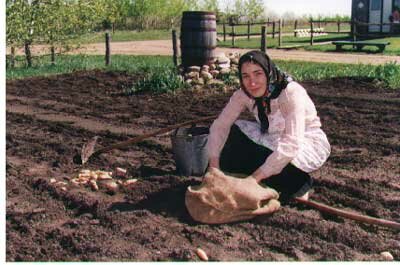
You won’t find much corn in the Pylypow House garden at the Ukrainian Cultural Heritage Village. That’s because Iwan and Maria Pylypow came from the Carpathian village of Nebyliw and, like other Ukrainian pioneers, brought with them the planting customs of their home region. Corn wasn’t in the Pylypows’ gardening heritage because the land in Nebyliw was too poor. But you will find plenty of beets in the Pylypow heritage garden, because Maria loved her beet soup. These are the kinds of historic details that help interpretive staff at the village authentically recreate the gardens of Alberta’s Ukrainian pioneers. Iwan Pylypow visited Canada on a fact-finding journey in 1891 and became one of the key figures in the mass immigration of Ukrainians to Canada just before the turn of the century. The Pylypow garden is one of seven heritage gardens at the Ukrainian Cultural Heritage Village. Like the Pylypow House, the garden is interpreted as it would have been in 1927, when the family had achieved financial prosperity. "We try to keep the gardens planted as they were historically," says Lesia Petriw, a senior interpreter at the village. "We want them to be as close as possible to the way they would have been at the time we’re interpreting." Researchers scour a variety of sources for clues, from seed offerings in old Eaton’s catalogues to pioneers still living in the area. As a result of their sleuthing, staff add new flowers, vegetables and legumes to the heritage gardens each season. This summer, watch for watermelon along with other new additions. "We discovered that the Grekul family from near Smoky Lake grew watermelons," Petriw explains. |
 |
 |
 |